
The FHA Bankruptcy Waiting Period
Navigating the FHA Bankruptcy Waiting Period: Your Roadmap to Homeownership
Filing for bankruptcy can feel like hitting a massive reset button on your life. It’s stressful, overwhelming, and it often leaves people wondering if their dream of owning a home is permanently out of reach.
Fortunately, it isn't.
The Federal Housing Administration (FHA) offers one of the most forgiving paths to homeownership for individuals looking to bounce back from financial hardships. However, you can't just walk into a lender's office the day after your debts are wiped clean. You have to navigate the FHA bankruptcy waiting period first.
This mandatory pause is designed to ensure you've had ample time to stabilize your finances before taking on a major new asset. Let's look into exactly how long you have to wait, how different types of bankruptcies affect your timeline, and how you can position yourself to secure an FHA loan after bankruptcy.
Why the FHA Enforces a Waiting Period
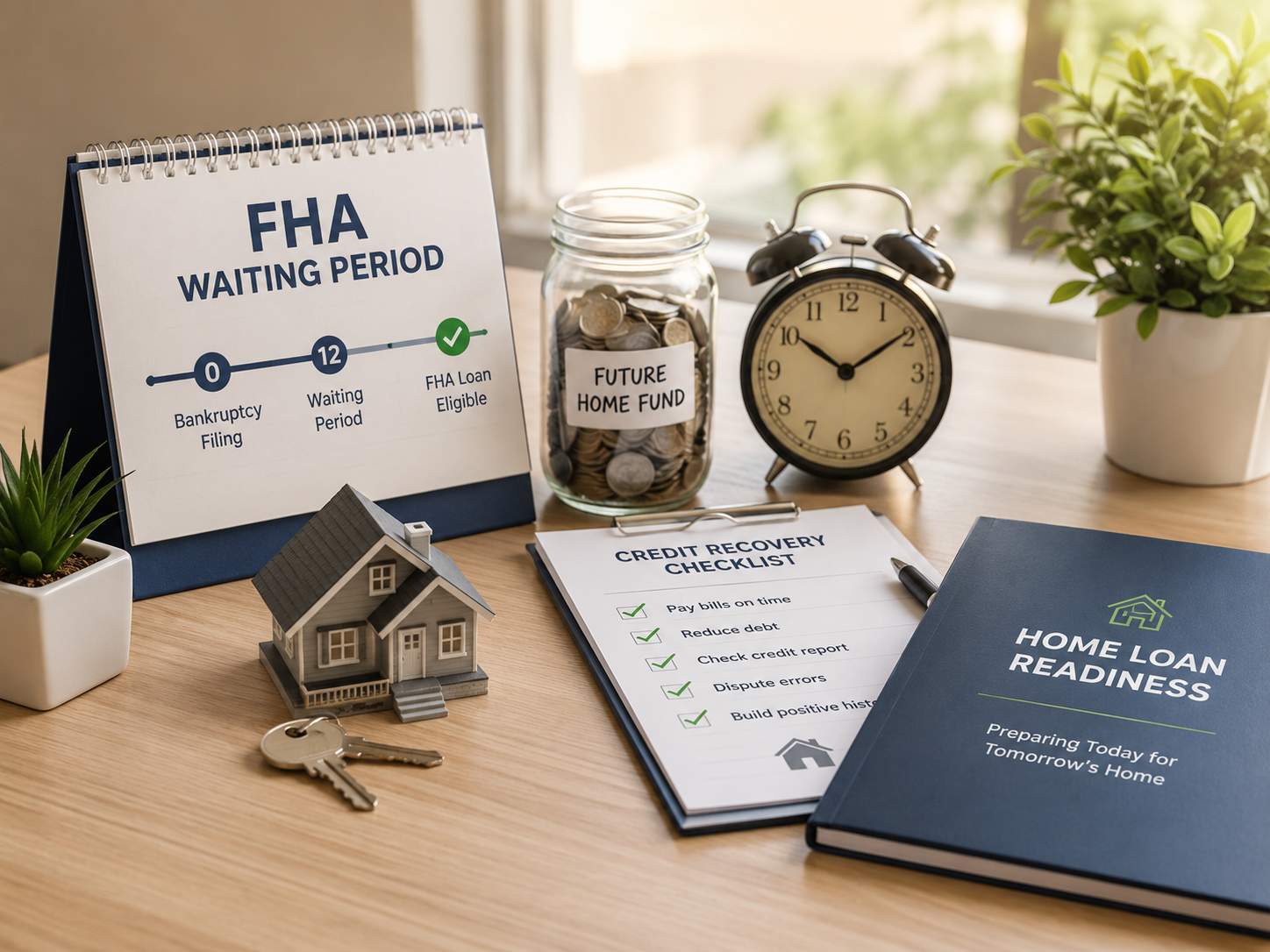
Lenders aren't trying to punish you; they’re trying to manage risk. When a bank looks at a mortgage application from someone who recently filed for bankruptcy, they see a history of financial distress.
The waiting period serves two vital functions:
- For Lenders: It provides a track record showing that you can manage your money responsibly post-bankruptcy. It proves you aren't immediately sliding back into old financial habits.
- For Borrowers: It gives you a much-needed breathing room to rebuild your credit score, save up a down payment, establish a reliable source of income, and ensure you won't be overwhelmed by a monthly mortgage payment.
While waiting can feel frustrating when you're eager to buy, treating this time as a financial training camp will ultimately help you land better loan terms and a lower interest rate.
Chapter 7 vs. Chapter 13: Understanding Your Timeline
The exact length of your FHA bankruptcy waiting period depends entirely on the type of bankruptcy you filed. Because Chapter 7 and Chapter 13 handle debt restructuring differently, the FHA treats them with varying degrees of flexibility.
The Chapter 7 Bankruptcy Timeline
Often called a "liquidation bankruptcy," Chapter 7 wipes out most of your unsecured debts, like credit card balances and medical bills. Because it completely erases your obligations, the FHA requires a stricter waiting time.
The Rule: You must wait a minimum of two years from the formal date your Chapter 7 bankruptcy was discharged—not the date you originally filed it—before you can apply for an FHA loan.
Simply letting two years tick away on the calendar isn't enough, though. To qualify for an FHA loan after bankruptcy, you must also prove the following to an underwriter:
- Re-established Credit: You need to show that you've actively opened new, small lines of credit (like a secured card) and maintained a spotless payment history.
- No New Derogatory Marks: If you have late payments, collections, or overdrafts during your two-year waiting period, underwriters will likely deny your application.
- Stable Employment: You need a consistent job history, typically spanning at least two years, showing a steady or increasing income.
The Chapter 13 Bankruptcy Timeline
Chapter 13 is a "reorganization bankruptcy" where you enter into a court-mandated repayment plan to pay back a portion of your debts over three to five years. Because you are actively paying back what you owe, the FHA is significantly more lenient.
The Rule: You do not have to wait until your Chapter 13 is discharged. You can actually apply for an FHA loan while still in the middle of your bankruptcy, provided you have made at least 12 months of consecutive, on-time payments under your court plan.
To successfully pull this off, you will need to clear two major hurdles:
- Court Approval: You must get written permission from your bankruptcy trustee or the court allowing you to take on new debt.
- Manual Underwriting: Most lenders will require a manual review of your file to ensure your income comfortably covers both your bankruptcy payment plan and your proposed mortgage payment.
At-a-Glance: FHA Post-Bankruptcy Rules
| Bankruptcy Type | Mandatory Waiting Period | Core FHA Requirement |
|---|---|---|
| Chapter 7 | 2 Years from Discharge date | Clean credit post-discharge, stable income, and re-established credit history. |
| Chapter 13 | 1 Year of on-time Payments | 12 months of perfect plan payments and written permission from the court. |
Are Real Exceptions to the Rule Possible?
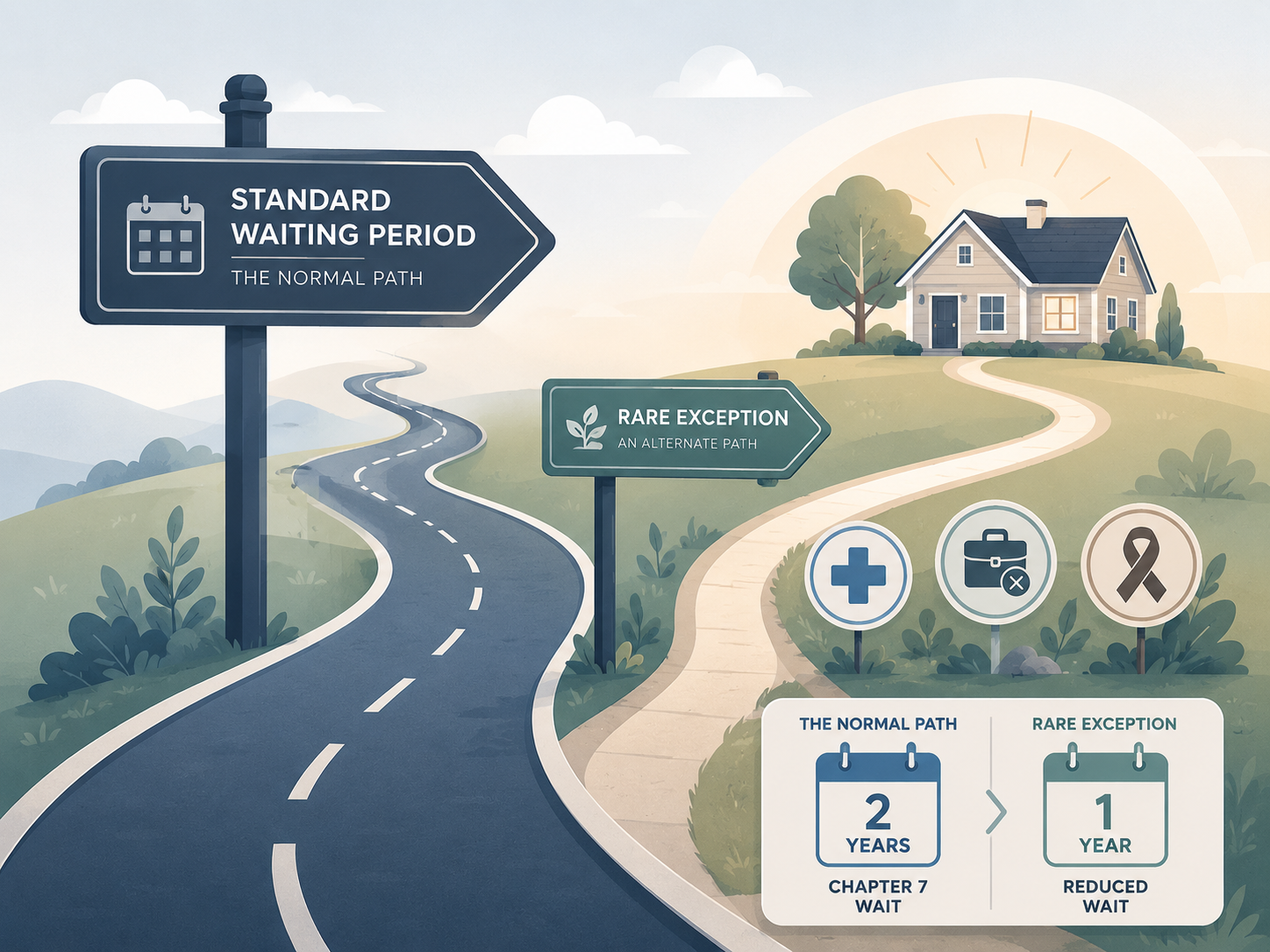
Can you bypass the standard two-year FHA bankruptcy waiting period for a Chapter 7 filing? Technically, yes—but it is incredibly rare and difficult to pull off.
The FHA permits lenders to reduce the waiting period to one year if you can conclusively prove that the bankruptcy was caused by extenuating circumstances beyond your control.
To win this exception, the event must have been temporary, severe, and completely unexpected. Examples include:
- The sudden death of a household's primary wage earner.
- A severe, long-term illness or medical emergency that resulted in unmanageable bills, despite having insurance.
- A major company layoff or factory closure that wiped out your job with no immediate local alternative.
Consistently overspending, a messy divorce, or failing a business due to poor economic forecasting generally do not qualify as extenuating circumstances. Furthermore, you must provide extensive documentation showing that you have completely recovered from the event and have managed your finances perfectly ever since.
Actionable Tips to Secure an FHA Loan After Bankruptcy
Sitting around and waiting for time to pass won't guarantee a mortgage approval. You need to use your waiting period to build an airtight financial profile. Underwriters look at your post-bankruptcy life under a microscope. Here is your game plan to ensure they like what they see:
1. Master Your Credit Architecture
Don't be afraid of credit after bankruptcy; you need it to prove you've reformed.
- Get a Secured Credit Card: Put a small cash deposit down, use the card for minor monthly expenses (like groceries or gas), and pay the balance down to zero every single month.
- Watch Your Utilization: Never use more than 30% of your available limit. Keeping it under 10% is even better for your score.
- Audit Your Credit Reports: Mistakes happen. Ensure your credit reports accurately show your bankrupt debts as "Discharged" with a zero balance. If a creditor reports a wiped-out debt as actively past due, dispute it immediately.
2. Drive Down Your Debt-to-Income (DTI) Ratio
Your DTI ratio compares your monthly debt obligations to your gross monthly income. FHA lenders generally prefer a DTI ratio below 43%, though some flexible lenders go higher if your credit is strong. Avoid financing a new car or taking on personal loans during this period, as it will shrink the amount of mortgage you can qualify for.
3. Stash Cash Aggressively
While FHA loans boast a low down payment requirement—typically 3.5% if your credit score is 580 or higher—having "shock absorber" money makes you look much safer to a lender. Accumulating solid cash reserves (savings left over after paying your closing costs and down payment) signals to underwriters that a sudden home repair won't send you spiraling back into bankruptcy court.
Assembly of Your Professional Team

Navigating a mortgage application post-bankruptcy isn't a solo journey. To maximize your chances of success, you should consult with key experts:
- A Mortgage Broker: Not all lenders handle post-bankruptcy applications the same way. Some overlay their own strict internal rules (called lender overlays) on top of standard FHA rules. A knowledgeable broker can pair you with a lender known for being bankruptcy-friendly.
- A Bankruptcy Attorney: If you are currently in a Chapter 13 plan and want to buy a home, your attorney is vital. They will file the necessary motions to secure the required court permission, ensuring you don't violate the terms of your legal agreements.
If you are ready to explore your options or need legal guidance regarding your discharge status, feel free to reach out to get started on your path toward financial recovery and homeownership.
Does the type of loan (conventional, FHA, VA, USDA) change the bankruptcy waiting period?
Yes. The waiting period can vary significantly depending on the mortgage program. FHA loans generally require a two-year wait after a Chapter 7 discharge, although a shorter period may be possible in limited situations involving documented extenuating circumstances. Chapter 13 filers may qualify sooner through FHA if they have completed at least 12 months of on-time plan payments and receive any required court approval.
Conventional loan requirements are often stricter. For example, many conventional loans that follow Fannie Mae guidelines require a four-year wait after a Chapter 7 bankruptcy and a two-year wait after a Chapter 13 discharge. VA and USDA loans have their own rules as well. Because each program and lender evaluates bankruptcy history differently, it is important to review your options before deciding when to apply for a mortgage.
Can I get an FHA loan during my bankruptcy waiting period?
It depends on the type of bankruptcy you filed. If you completed a Chapter 7 bankruptcy, you will usually need to wait at least two years from the discharge date before qualifying for an FHA loan. In rare cases, the waiting period may be reduced to one year when the bankruptcy resulted from documented circumstances beyond your control, and you can show that your finances have stabilized.
Chapter 13 filers may have more flexibility. You may be eligible for an FHA loan while still making payments under a Chapter 13 plan if at least 12 months of the repayment period have passed, all required payments have been made on time, and you receive written permission from the bankruptcy court or trustee to take on a mortgage. Final approval will still depend on your income, credit, debts, and the lender’s underwriting standards.
Will all lenders have the same bankruptcy waiting period for FHA loans?
No. FHA establishes baseline eligibility requirements, but FHA loans are issued by private lenders. That means individual lenders may apply stricter internal requirements, sometimes called lender overlays, when deciding whether to approve an application.
For example, one lender may follow FHA’s minimum waiting period while another may require a higher credit score, a longer period of clean payment history, lower debt-to-income ratio, or additional documentation. Speaking with more than one FHA-approved lender can help you understand which options may be available based on your bankruptcy history and current financial situation.






Share On: