
Small Business Bankruptcy
Small Business Bankruptcy: Options and Considerations
Steering a business through turbulent financial waters is one of the most grueling challenges an entrepreneur can face. You poured late nights, personal savings, and endless energy into building your venture, but when revenue dips and liabilities mount beyond control, hard decisions become unavoidable. Financial distress does not mean you have failed as an entrepreneur; often, market shifts, supply chain disruptions, or unexpected economic downturns push even the most resilient operations into a corner. When mounting debt threatens to paralyze daily operations, understanding small business bankruptcy is the first step toward regaining control. It isn't merely a mechanism for closing shop—when utilized strategically, bankruptcy serves as a powerful legal shield designed to stabilize your finances, resolve insurmountable debt, and establish a clear path forward. Whether you operate as a sole proprietor or manage a multi-member entity, knowing how federal debt relief laws apply to your specific structure allows you to protect your personal assets, minimize long-term credit damage, and make pragmatic choices for your economic future.
What is Small Business Bankruptcy?

At its core, small business bankruptcy is a formal legal procedure conducted in federal court, designed to assist distressed entities and individual operators in dealing with overwhelming debt. Governed by Title 11 of the United States Code, this process immediately places a protective barrier between you and your creditors. The primary purpose is twofold: either to liquidate assets to pay off creditors in an orderly fashion or to restructure existing liabilities so the business can continue operating under modified terms.
How this process unfolds largely depends on the legal framework under which your business operates. For instance, an
LLC bankruptcy operates under distinct rules compared to a sole proprietorship. Because a Limited Liability Company is a legally separate entity from its owners, initiating a
company bankruptcy treats the entity's debts independently—provided the owners have not compromised that separation through personal guarantees. Understanding these legal distinctions ensures that you choose a path that addresses corporate liabilities while safeguarding your personal financial security.
Types of Bankruptcy for Small Businesses
Federal law provides multiple avenues for relief, each tailored to different operational structures, debt loads, and long-term objectives. Choosing the right path requires evaluating whether you intend to keep the doors open or bring operations to an orderly close.
Chapter 7 Bankruptcy
Often referred to as a "straight liquidation," Chapter 7 bankruptcy is designed for businesses that no longer have a viable path to profitability. Under Chapter 7, a court-appointed trustee takes control of the business’s non-exempt assets, sells them, and distributes the proceeds to creditors according to legal priorities set by federal law.
For sole proprietors, Chapter 7 offers a major advantage: at the end of the process, qualifying personal and business debts are fully discharged, granting the owner a true fresh start. However, when an LLC or corporation files under Chapter 7, the entity does not receive a formal debt discharge. Instead, the process simply provides a transparent, court-monitored liquidation that winds down the business, distributes assets fairly, and shields owners from allegations of favoring certain creditors over others.
Chapter 13 Bankruptcy
Chapter 13 is a reorganization tool reserved exclusively for individuals—which means corporate entities like LLCs and partnerships cannot file under this chapter. However, for sole proprietors whose personal and business finances are legally intertwined, Chapter 13 can be an exceptionally effective tool.
In a Chapter 13 proceeding, the owner creates a comprehensive repayment plan to pay back creditors—either in full or in part—over a three- to five-year period. This allows the business owner to retain their assets and keep the doors open while servicing debt through manageable monthly payments calculated based on disposable income. It is particularly helpful for sole proprietors facing temporary cash flow disruptions who need protection from foreclosure or repossession while catching up on secured debts.
Chapter 11 Bankruptcy
Chapter 11 represents the classic corporate reorganization framework. It allows a business to maintain operations as a "debtor in possession" while developing a court-approved plan to restructure leases, renegotiate vendor contracts, and reduce total debt. While historically known as a costly and complex process suited mainly for large corporations, modern laws have made Chapter 11 far more accessible to smaller enterprises.
Specifically, Subchapter V of Chapter 11—introduced under the Small Business Reorganization Act—drastically streamlines the reorganization process for qualifying small business owners. Subchapter V reduces administrative costs, eliminates expensive creditor committees in most cases, and allows business owners to retain their equity in the company even if unsecured creditors are not paid in full, as long as the business commits its projected disposable income to the plan over three to five years.
Who Needs to File Bankruptcy – The Business, the Owner(s), or Both?
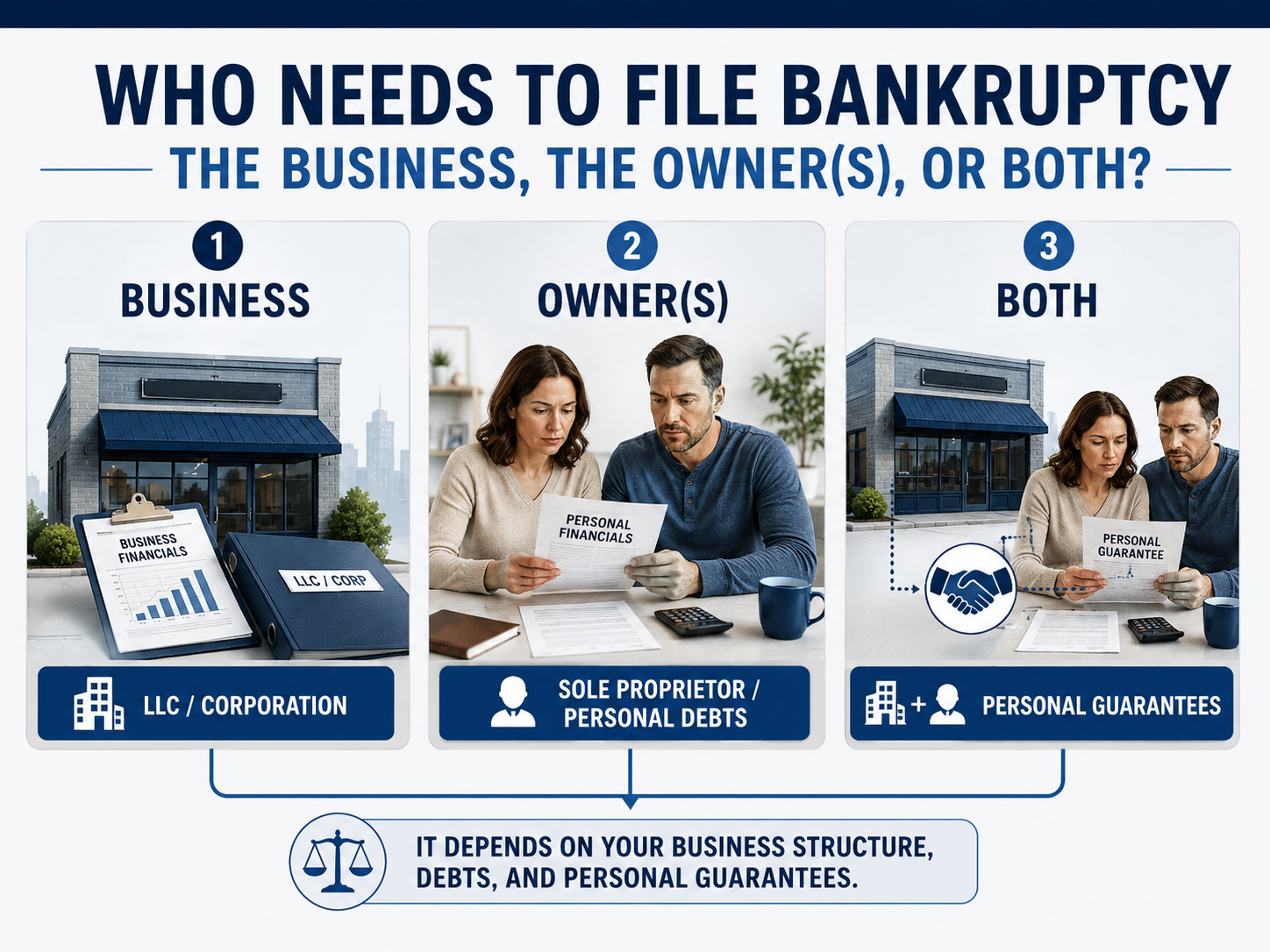
Determining who needs to seek legal protection is one of the most critical preliminary questions in small business debt relief. The answer hinges entirely on corporate structure and how liabilities were originally secured.
In a sole proprietorship, there is no legal separation between the individual and the business entity. The debts of the business are legally the personal debts of the owner. Therefore, filing for relief means the individual owner files, addressing both personal living debts and commercial liabilities in a single petition.
Conversely, when dealing with an
LLC bankruptcy or corporate filing, the entity exists as an independent legal person. A pure
company bankruptcy liquidates or reorganizes the business's debts without directly dragging the owners into personal bankruptcy court. However, there is a major catch: personal guarantees. Lenders, commercial landlords, and credit card issuers frequently require small business owners to personally guarantee commercial loans. If your business files for bankruptcy but you signed a personal guarantee, creditors retain the legal right to pursue your personal assets for the unpaid balance. In such scenarios, owners often find themselves needing to file personal bankruptcy concurrently with or shortly after the corporate filing.
The Bankruptcy Process for Small Businesses
Navigating the legal system requires careful adherence to procedural rules and strict deadlines. Knowing what to expect at each stage helps eliminate surprises and lowers stress.
Filing for Bankruptcy
- Initial Consultation: You will work alongside a qualified attorney to review your balance sheets, evaluate personal guarantees, and select the optimal bankruptcy chapter.
- Document Preparation: You must compile comprehensive financial records, including income tax returns, balance sheets, profit-and-loss statements, payroll logs, bank statements, and an exhaustive list of all creditors and assets.
- Petition Filing: Your attorney files the formal bankruptcy petition with the clerk of the federal bankruptcy court in your district.
- The Automatic Stay: The moment the petition is filed, an automatic stay goes into effect. This immediate injunction halts all collection activities, lawsuits, wage garnishments, repossessions, and pending foreclosures against the debtor.
- Trustee Appointment: The court assigns an impartial trustee to oversee the case, review financial disclosures, and administer liquidations or plan payments depending on the chapter.
- Meeting of Creditors (341 Meeting): Roughly 20 to 40 days after filing, you (and your counsel) attend a mandatory meeting where the trustee and interested creditors can ask questions under oath regarding your financial schedules and business history.
- Plan Proposal or Liquidation: Under reorganization chapters, you submit a formal repayment plan for court confirmation. Under Chapter 7, the trustee begins marshaling and liquidating non-exempt corporate or personal assets.
After Filing
Once the initial procedural steps are completed, the long-term impact on your business operations unfolds according to the chosen path:
- Operational Changes: In Chapter 7, operations cease entirely as assets are liquidated. In Chapters 11 and 13, you continue operating under strict court-mandated reporting requirements and monthly budget constraints.
- Contract and Lease Modifications: Reorganization allows you to assume or reject unexpired leases and executory contracts, enabling you to walk away from burdensome commercial real estate leases or unprofitable equipment agreements.
- Credit and Financing Considerations: A bankruptcy filing will remain on credit reports for 7 to 10 years. While securing traditional bank financing will be challenging initially, completing the process eliminates old liabilities, making your revamped business or personal financial profile far more attractive to specialized lenders over time.
Alternatives to Bankruptcy for Small Businesses
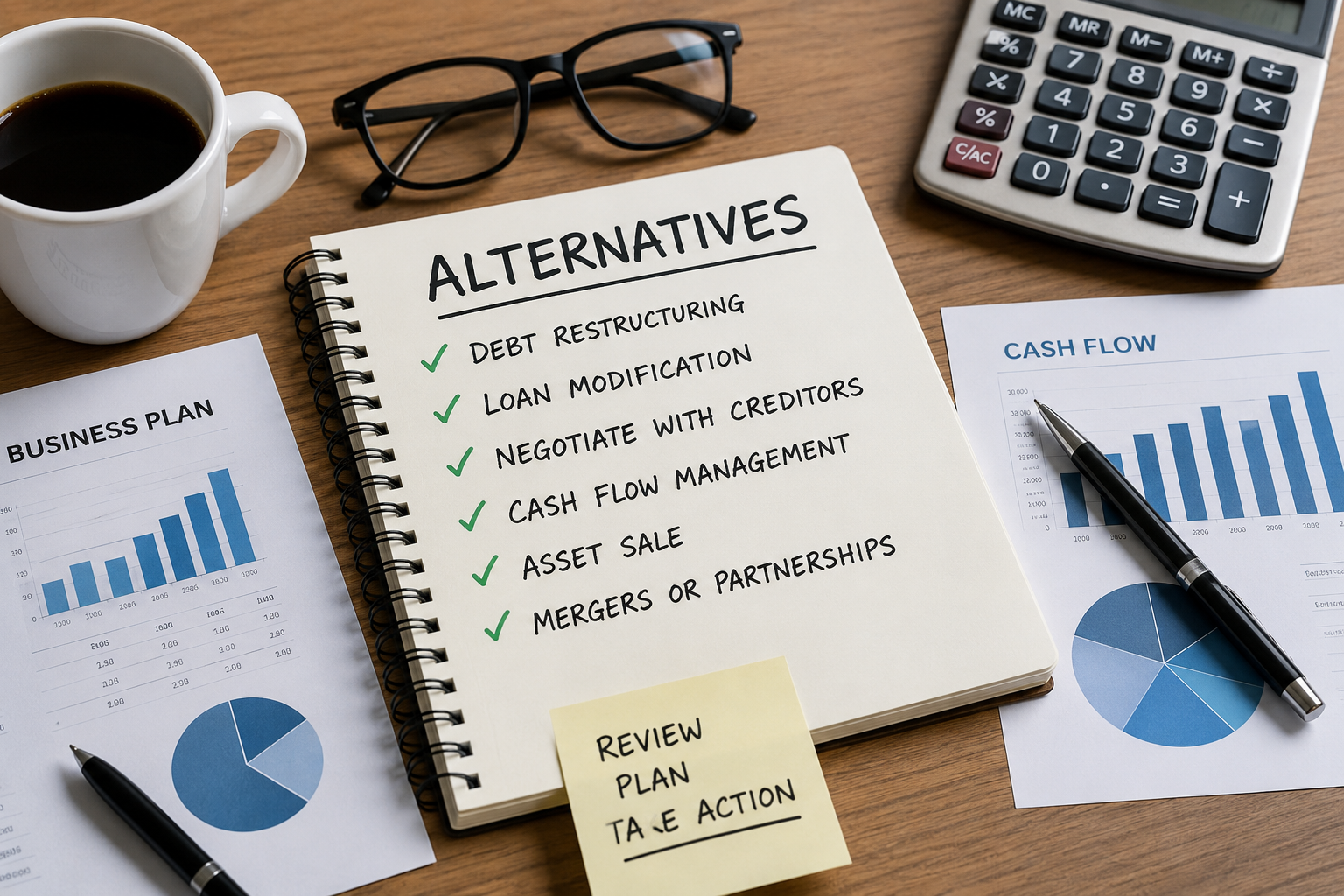
Formal court proceedings are not the only remedy for financial distress. Exploring out-of-court solutions can often resolve debt crises with less public exposure and lower administrative costs.
Debt Restructuring
Out-of-court debt restructuring involves negotiating directly with existing lenders to modify loan covenants, lower interest rates, defer principal payments, or extend repayment terms. Lenders often prefer restructuring over formal court filings because it avoids expensive legal fees and guarantees a predictable return on their investment compared to bankruptcy distributions.
Negotiating with Creditors
Direct vendor negotiations can provide immediate relief when working capital grows tight. Many suppliers and unsecured creditors are open to accepting lump-sum settlements for a percentage of the total debt, or agreeing to informal workout plans, rather than risk getting pennies on the dollar if you opt for a company bankruptcy. Maintaining transparent communication and presenting realistic, cash-flow-backed settlement offers can preserve vital vendor relationships while paring down unsustainable debt.
Preparing for Bankruptcy: Considerations and Steps
Taking proactive, methodical steps prior to filing helps protect your legal rights and ensures a smoother transition through court supervision.
Financial Assessment
Conduct a rigorous audit of your financial standing. Separate all debts into secured (collateralized loans), priority unsecured (tax liabilities, unpaid employee wages), and general unsecured debts (trade credit, credit cards). Identify every document containing a personal guarantee and review your cash flow projections to determine if the core business model remains viable.
Legal and Financial Implications
Before initiating an LLC bankruptcy or personal filing, evaluate potential secondary impacts:
- Loss of Property: Determine which business assets are encumbered by liens and which may be sold by a trustee.
- Impact on Licenses and Permits: Ensure that filing will not automatically revoke regulatory licenses required to operate in your industry.
- Personal Credit Fallout: Understand how personal guarantees will impact your personal credit scores and household assets if the business defaults.
- Tax Consequences: Debt canceled outside of bankruptcy can sometimes trigger taxable income, whereas debt discharged inside bankruptcy receives special tax relief under the Internal Revenue Code.
Consult With a Bankruptcy Attorney Before Making a Decision
Deciding how to address severe debt issues is one of the most consequential decisions you will ever make as a commercial operator. Choosing between liquidation, reorganization, or out-of-court workouts requires balancing intricate state corporate laws with federal bankruptcy statutes.
An experienced legal team can analyze your balance sheet, help you understand the risks associated with personal guarantees, and craft a strategy tailored to your specific commercial goals. Whether you are navigating an LLC bankruptcy, closing down a sole proprietorship, or trying to restructure a company bankruptcy while keeping operations alive, professional legal counsel protects you from costly procedural mistakes and preserves your path toward financial stability.
If your business is facing mounting financial pressure, do not wait until creditors force your hand.
Contact Our Office today to schedule a confidential consultation with a skilled bankruptcy attorney who can help you take back control of your financial future.
Small Business Bankruptcy FAQ's
Can you get a small business loan with bankruptcy?
Yes, but it can be challenging. Lenders may require higher interest rates, more collateral, or a stronger co-signer. Government-backed SBA loans are typically not available until several years after bankruptcy, depending on the type filed.
Is it possible to obtain new financing while in the midst of a bankruptcy process?
In certain Chapter 11 cases, it may be possible to obtain debtor-in-possession (DIP) financing, which is specifically designed to help businesses operate during reorganization. For Chapter 13 filers, court approval may be needed for new credit.
How does small business bankruptcy affect personal credit?
If the business is a sole proprietorship or the owner has personally guaranteed debts, bankruptcy will appear on their personal credit report and negatively impact their credit score. For LLC or corporation owners without personal guarantees, personal credit may remain unaffected.







Share On: