
Questions You Will be Asked at Your Meeting of Creditors
Judson Caruson • April 30, 2022
What Kind of Questions will the Trustee ask at Your Meeting of Creditors?

Most people are very worried about their Meeting of Creditors and about what kind of question they will have to answer.
Here is the list of required questions and suggested general questions based on a list that has been prepared by the US Trustee's Office.
SECTION 341(a) MEETING OF CREDITORS
REQUIRED STATEMENTS/QUESTIONS
The following statements and questions are required. The trustee shall ensure the debtor answers the substance of
each of the questions on the record. The trustee may exercise discretion and judgment in varying the
wording of the statements/questions, if the substance of the questions is covered.
1. State your name for the record. Is the address on the petition your current address?
2. Please provide your picture ID and Social Security number card for review.
3. Did you sign the petition, schedules, statements, and related documents and is the signature your own? Did you read the petition, schedules, statements, and related documents before you signed them?
4. Are you personally familiar with the information contained in the petition, schedules, statements and related documents? To the best of your knowledge, is the information contained in the petition, schedules, statements, and related documents true and correct? Are there any errors or omissions to bring to my attention at this time?
5. Are all of your assets identified on the schedules? Have you listed all of your creditors on the schedules?
6. Have you previously filed bankruptcy?
7. What is the address of your current employer?
8. Is the copy of the tax return you provided a true copy of the most recent tax return you filed?
9. Do you have a domestic support obligation? (If so, you must complete a domestic support obligation form that your lawyer will provide. It requires that you list to whom you owe the obligation including the claimant’s address and telephone number.) Are you current on your post-petition domestic support obligations?
10. Have you filed all required tax returns for the past four years?
SAMPLE GENERAL QUESTIONS
To be asked when deemed appropriate.
1. Do you own or have any interest whatsoever in any real estate? If owned: When did you purchase the property? How much did the property cost? How much do you owe on it? What do you estimate the present value of the property to be? Is that the whole value or your share? How did you arrive at that value?
Have you owned any real estate in the last 4 years that is not in your name now? If so, what happened to it. If it was sold, how much did you receive from the sale and what happened to those proceeds.
If renting: Have you ever owned the property in which you live and/or is its owner in any way related to you?
2. Did you purchase or refinance a vehicle in the last 6 months? If yes, you will be required to provide a copy of the purchase agreement and registration to the trustee.
3. Does anyone hold property belonging to you? If yes: Who holds the property and what is it? What is its value?
4. Do you have a claim against anyone or any business? If there are large medical debts, are the medical bills from injury? Is there anyone you could sue? Are you the plaintiff in any lawsuit? What is the status of each case and who is representing you?
5. Are you entitled to life insurance proceeds or an inheritance as a result of someone’s death? If yes: Please explain the details.
If you become a beneficiary of anyone’s estate within six months of the date your bankruptcy petition was filed, the trustee must be advised within ten days through your counsel of the nature and extent of the property you will receive.
6. Does anyone owe you money? If yes: Is the money collectible? Why haven’t you collected it? Who
owes the money and where are they?
7. Have you made any large payments, over $600, to anyone in the past year?
8. Were federal income tax returns filed on a timely basis? When was the last return filed? At the time of the filing of your petition, were you entitled to a tax refund from the federal or state government ? If yes: Inquire as to amounts. If you received your refunds before your case was filed, what did you do with them? Did you give any of them to family or friends?
9. Do you have a bank account, either checking or savings? If yes: What were the balances in each account as of the date you filed your petition?
10. When you filed your petition, did you have:
a. any cash on hand?
b. any U.S. savings bonds?
c. any other stocks or bonds?
d. any certificates of deposit?
e. a safe deposit box in your name or in anyone else's name?
f. any crypto currency?
11. Do you own an automobile? If yes: What is the year, make, and value? Do you owe any money on it? Is it insured?
12. Are you the owner of any cash value life insurance policies? If yes: State the name of the company, face amount of the policy, cash surrender value, if any, and the beneficiaries.
13. Do you have any winning lottery tickets?
14. Were you divorced in the last 4 years. If so, is there anything that it still owing to you are a result of that divorce. If you are married and your spouse is not part of this case, do they have any property in their name not listed on your asset schedules. If you were to be divorced or separated, do you anticipate that you might realize any property, cash or otherwise, as a result of a divorce or separation proceeding?
15. Have you been engaged in any business during the last six years? If yes: Where and when? What happened to the assets of the business?
16. Have you made any transfers of any property or given any property away within the last four year period ?
If yes: What did you transfer? To whom was it transferred? What did you receive in exchange? What did you do with the funds?

Discover how Oregon and federal bankruptcy exemptions differ and what those options could mean for your property and retirement accounts
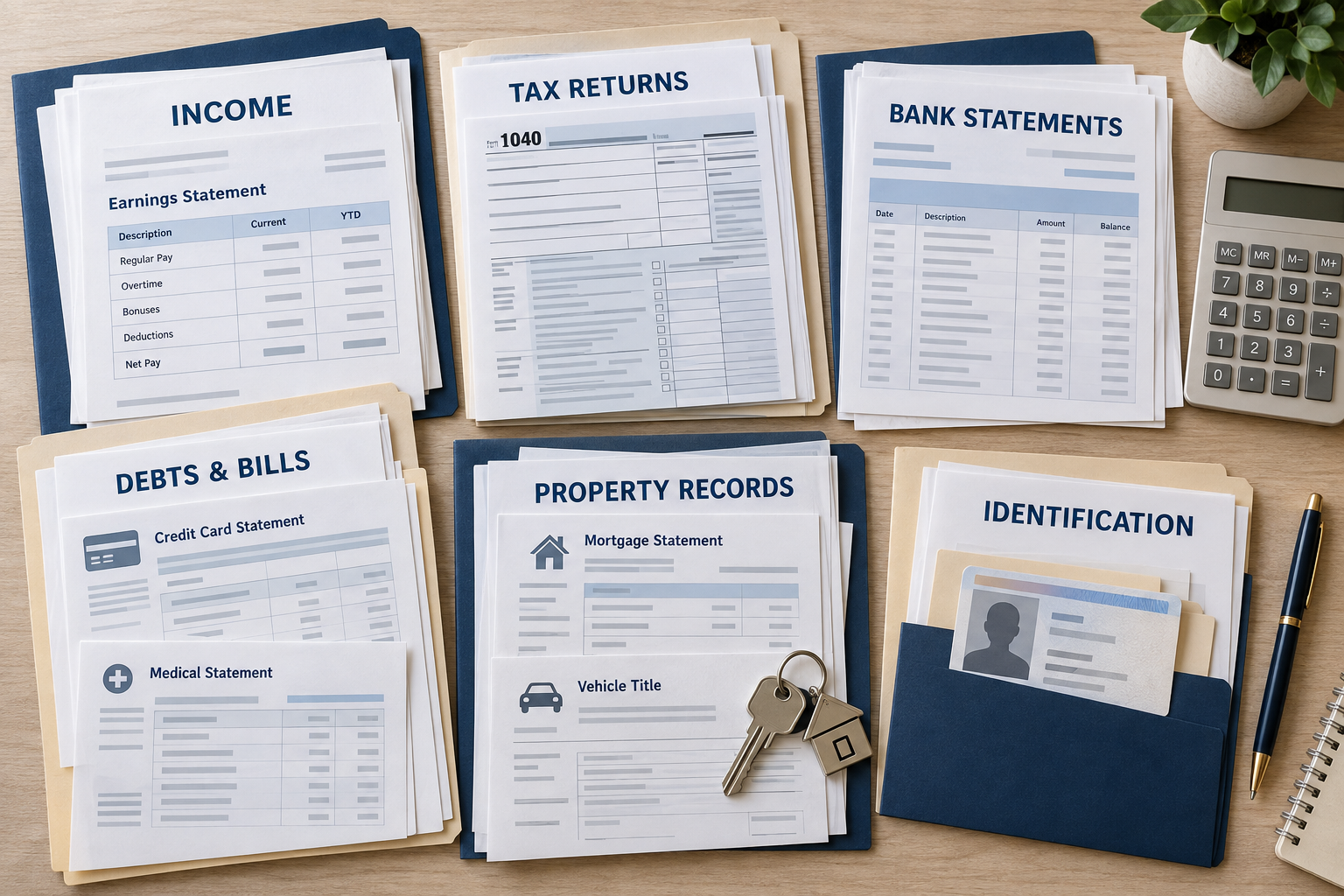
Preparing to file bankruptcy in Oregon? Use our bankruptcy checklist to gather essential documents, organize your records, and avoid common filing delays.

How does bankruptcy affect renters and landlords? Learn about eviction stays, back rent, leases, tenant protections, and landlord remedies.

Discover how company bankruptcy works, who should file, how personal guarantees affect owners, and which bankruptcy options may fit your business.

Discover the most common types of bankruptcy fraud, including asset concealment, serial filings, and petition mills, plus how to stay compliant.

Explore the FHA bankruptcy waiting period, Chapter 7 and Chapter 13 timelines, rare exceptions, and how to prepare for homeownership.

Discover how the Oregon statute of limitations on debt affects creditors and consumers. Learn your rights and debt relief options today.

Worried about car repossession in Oregon? Learn how the process works, your rights, and options to prevent vehicle loss.
Understand federal bankruptcy exemptions and what assets you can keep, including your home, vehicle, and retirement savings.

Learn who qualifies for a COVID tax refund, key IRS deadlines, and how to claim your money before time runs out.
Share On: